

Learning Module 3
Interaction of EMR with Earth's Atmosphere and Surfaces
Introduction
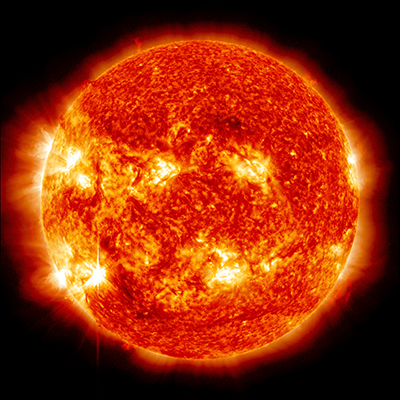
The Sun is the primary source of electromagnetic radiation measured in remote sensing techniques. In the previous section, we learned that the Sun radiates electromagnetic energy over a wide range of wavelengths and emits the most radiation in the visible portion of the spectrum. Before the electromagnetic energy from the Sun reaches the Earth’s surface, it must pass through the atmosphere. As the energy passes through the atmosphere, it interacts with the molecules and particles present in the atmosphere. Once it reaches the Earth's surface this energy can be reflected, absorbed or transmitted. In this section we will learn about how the atmosphere and the surfaces on the Earth interact with EMR and how this is fundamental to remote sensing.
Learning Outcomes
- Explain the influence of the atmosphere on the transmission, absorption and scattering of electromagnetic energy.
- Describe the concept of atmospheric windows and the importance of these regions to remote sensing.
- Understand the factors that impact surface reflectance, including the wavelength of energy, surface geometry and properties of surface materials.
- Explain spectral reflectance curves and describe what they look like for common materials.
Readings
- Read pages 69-85 in Principles of remote sensing: An introductory textbook
Presentations and Content
- Atmospheric Absorption & Transmission
- Atmospheric Scattering
- Interaction with the Earth's Surface
- Spectral Reflectance
- Vegetation Spectral Reflectance Curves